Home / Articles
What to Expect After Lens Implant Surgery for Presbyopia
Home / Articles
What to Expect After Lens Implant Surgery for Presbyopia
A patient-centered guide from GS Eye Center, Gangnam
For many professionals in Seoul, presbyopia doesn’t arrive with drama — it creeps in quietly. One day, your phone screen feels just a little farther away. Restaurant menus become a test of lighting. Reading glasses start appearing in places you never planned for: the car, the office, the bedside table.
In Korea, where long work hours, screen-heavy jobs, and fast-paced urban life are the norm, presbyopia often feels less like a natural aging change and more like a daily inconvenience. Patients don’t necessarily want “perfect vision” — they want freedom, efficiency, and confidence in their daily routines.
This guide walks you through what recovery truly feels like — physically, visually, and emotionally. It explains what changes are normal, what takes time, and how vision typically stabilizes after lens implant surgery for presbyopia. It’s written from the perspective of clinicians who have guided thousands of patients through this process, and who understand that reassurance and clarity matter just as much as surgical precision.
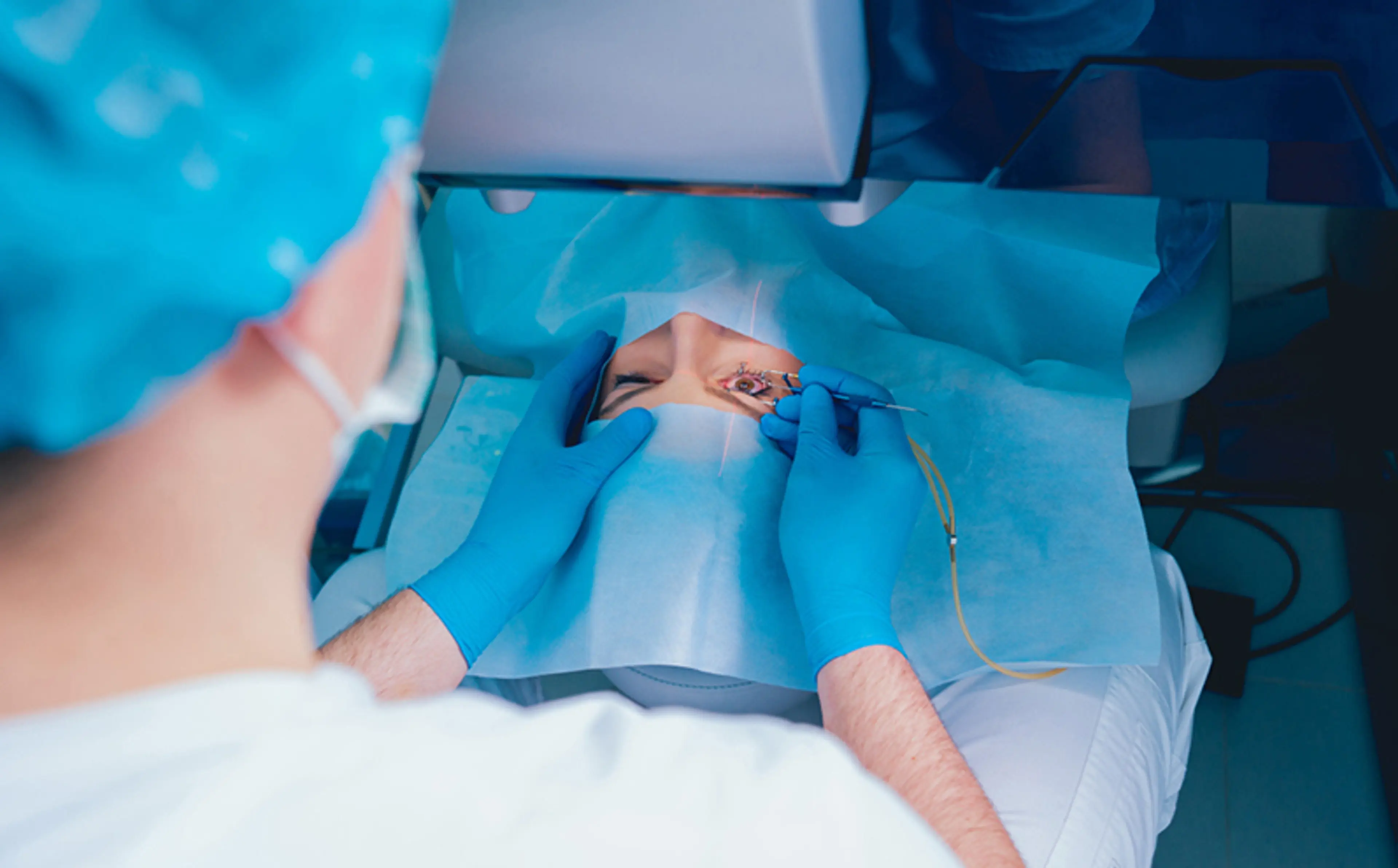
Lens implant surgery for presbyopia is typically completed in under 20 minutes per eye. The procedure uses micro-incision techniques and is performed under topical anesthesia, meaning patients remain awake but comfortable. There is no pain during surgery, and most people are able to walk out of the clinic shortly afterward.
Mild blurriness or haze is expected during the first several hours. Light sensitivity is also common, particularly in bright indoor lighting or sunlight. Some patients describe a foreign-body sensation, similar to having an eyelash in the eye. These sensations can feel unfamiliar, but they are temporary and part of the normal healing response.
To be honest, most people expect the first night to be difficult. In reality, many patients report that the anticipation was far worse than the experience itself.
It’s common to notice that vision quality changes throughout the day. Distance vision may feel clear in the morning and slightly softer in the evening. Near vision may be strong one moment and less reliable the next. Some patients notice halos or starbursts around lights at night, especially when driving.
These changes often cause concern, particularly for patients who expected immediate, stable results. In reality, this phase reflects the brain learning how to process light through a new optical system. This process — called neuroadaptation — is essential for presbyopia-correcting lenses, including multifocal and extended depth-of-focus designs.
At GS Eye Center, we emphasize this point during preoperative counseling because understanding it dramatically reduces anxiety. Vision rarely improves in a straight line. Instead, it improves in stages, with small fluctuations that gradually smooth out.
Most patients return to desk-based work within two to three days, especially if their job does not require heavy physical activity. Screen use is allowed, but regular breaks help reduce eye fatigue and dryness. Lubricating drops are often recommended in addition to prescribed medications.
Makeup, swimming, and sauna use should be avoided for about one week. Protective eye shields are usually worn at night for several days to prevent unconscious eye rubbing during sleep. These small precautions play an outsized role in ensuring smooth recovery.
This phase is often when patients begin to feel genuine relief — and excitement.
Near vision becomes more predictable. Reading glasses are used less frequently, sometimes not at all. Intermediate vision, such as computer screens and car dashboards, feels more natural. Distance vision sharpens, and contrast improves, especially in well-lit environments.
What people often overlook is how much preoperative diagnostic precision influences this stage. Lens implant surgery is not a one-size-fits-all solution. Accurate measurements of corneal shape, eye length, pupil behavior, and ocular surface health all influence how well the implanted lens performs.
This is why advanced diagnostic testing is not optional at specialized centers — it is foundational. When lens power and design are carefully matched to the individual eye, postoperative stabilization tends to be smoother and more predictable.
Although many patients feel satisfied within weeks, true visual stability can take up to three months.
This does not mean vision is poor during that time. Rather, it means finer aspects of visual quality continue to improve gradually. Night driving becomes more comfortable. Contrast sensitivity in low-light environments improves. Transitions between near, intermediate, and distance vision feel more seamless.
By the three-month mark, most patients report:
Comfortable reading without glasses for daily tasks
Clear intermediate vision for computers, tablets, and navigation screens
Stable distance vision that feels natural and dependable
Lens implants are designed to be long-lasting. Unlike contact lenses or glasses, they do not shift, dry out, or lose effectiveness over time. Once healing is complete, the correction remains stable for many years.
This is one of the most common and reasonable questions patients ask.
Temporary visual phenomena such as glare, halos, or mild dryness are relatively common in the early recovery period. For the vast majority of patients, these effects diminish significantly as neuroadaptation progresses and the ocular surface stabilizes.
Persistent side effects are uncommon when:
Lens selection is appropriate for the patient’s eye and lifestyle
Surgery is performed by experienced surgeons
Postoperative instructions are followed carefully
When patients do experience lingering symptoms, early communication makes a difference. Adjustments in eye drop regimens, reassurance about adaptation timelines, or additional evaluations often resolve concerns without further intervention.
Lens implant surgery does not end in the operating room.
Prescribed eye drops reduce inflammation, prevent infection, and support surface healing. Follow-up visits allow the surgeon to confirm that the implant is well positioned and that eye pressure remains within a safe range. These visits also help identify subtle issues early, before they affect comfort or vision quality.
Some patients underestimate this phase, assuming that a technically successful surgery guarantees an effortless recovery. In reality, consistent postoperative care is what allows excellent surgical work to translate into excellent real-world vision.
Interestingly, some patients experience a brief emotional adjustment period.
After years of relying on glasses, sudden visual independence can feel unfamiliar. Depth perception may feel slightly different at first. Reading posture changes. Even small habits, like reaching for glasses out of reflex, take time to fade.
These reactions are normal. They are not signs that something is wrong. In most cases, they resolve quietly as patients grow accustomed to their new visual system.
We often remind patients that recovery has layers: the eyes heal first, the brain adapts next, and confidence follows.
In clinical practice, the most satisfied patients tend to share a few characteristics. They entered surgery with realistic expectations. They understood that adaptation takes time. And they chose lens implant surgery based on lifestyle needs rather than trends or marketing.
Busy professionals, frequent travelers, and individuals frustrated by progressive reading glasses often describe lens implants as a subtle but meaningful upgrade to daily life. The freedom from constantly switching glasses or adjusting viewing distance can feel quietly transformative.
If presbyopia is starting to interfere with your work, comfort, or confidence, a comprehensive lens implant evaluation can clarify whether this option fits your eyes and your expectations.
At GS Eye Center in Gangnam, lens implant surgery is approached with the same philosophy applied to all vision correction: precision first, minimally invasive techniques, and calm, transparent patient care grounded in experience.
Sometimes the most important part of surgery isn’t what happens during the procedure — it’s how confidently you return to everyday life afterward.