Home / Articles
What Does a Comprehensive Eye Exam Actually Include?
Home / Articles
What Does a Comprehensive Eye Exam Actually Include?
A Doctor’s Perspective From 20 Years Inside Korean Ophthalmology**
To be honest, most first-time patients are surprised by the depth of it. Many have never experienced anything beyond a 5-minute refractive test at an optical shop. And yet, the eyes are one of the most information-rich organs in the human body; within minutes, they can reveal early signs of conditions like diabetes, hypertension, glaucoma, and age-related changes that quietly influence daily life.
This article breaks down what a comprehensive eye exam really involves, why it matters more than most people realize, and what you can expect inside a modern Korean ophthalmology clinic that prioritizes precision and patient comfort.
Korea has one of the highest rates of myopia in the world, especially among students and working professionals who spend long hours on screens. As a result, many adults assume vision changes are normal — simply “tired eyes,” “increased blur,” or “staring at laptops too much.”
What people often overlook is how quickly certain eye conditions progress when early signs go unnoticed. We routinely see patients who believed they “just needed new glasses,” only to discover:
early-stage keratoconus
early cataracts in their 40s
retinal thinning from high myopia
dry eye patterns linked to heavy device use
tear-film instability affecting night driving
nerve fiber changes suggestive of glaucoma risk
None of these would be caught in a brief vision test.
A true comprehensive exam is the only way to see these issues before symptoms appear — which is why ophthalmologists treat it as the foundation of safe laser vision correction, lens implant surgery, cataract planning, and long-term eye health.
A proper exam begins long before any machine testing.
To deliver safe and precise care — especially in Korea where many patients consider SMILE Pro or lens implants — your doctor needs to know:
daily screen time
night driving habits
history of eye rubbing
dry eye symptoms
past contact lens use
family history of glaucoma or keratoconus
systemic conditions (thyroid issues, diabetes, autoimmune concerns)
Think of this stage as the medical version of understanding your “visual personality.”
This is the part most people recognize from optical shops — but in a medical clinic, it’s far more refined.
Machines such as autorefractors give a baseline estimate of:
myopia
hyperopia
astigmatism
higher-order distortions
However, doctors never rely solely on machine numbers.
Your doctor adjusts lenses manually to determine the prescription your brain prefers. This is where small differences affect daily comfort — especially for patients considering laser vision correction.
In our clinic, the subjective refraction remains essential because it reveals how your visual system responds in real time to changes in clarity and contrast.
Many patients assume glaucoma only occurs in older individuals. In reality, Korea’s rate of normal-tension glaucoma is uniquely high, even among younger adults.
That’s why eye pressure measurement is part of every exam, regardless of age.
Modern clinics — including GS Eye Center — use gentle, non-contact or soft-contact methods so you barely feel anything. We also interpret pressure in relation to corneal thickness, because thicker or thinner corneas can distort readings.
(Understanding the Shape and Strength of Your Cornea)**
These 3D scans map:
corneal curvature
thickness distribution
biomechanical stability
subtle abnormalities invisible to the naked eye
Most patients are fascinated when they see these colorful maps — they look like heat maps of a small planet.
Corneal topography is crucial for:
safe LASIK
selecting SMILE Pro candidates
diagnosing early keratoconus
assessing long-term contact lens effects
predicting dry eye patterns
This is one of the reasons many busy professionals in Seoul choose SMILE Pro: the cornea remains stronger and more stable compared to flap-based procedures.
In modern Korea — where nearly everyone works on digital devices — dry eye is no longer considered a minor annoyance. It directly affects:
reading comfort
night clarity
surgical outcomes
long-term visual stability
A comprehensive exam evaluates:
tear production
tear-film breakup time
meibomian gland health
surface staining patterns
Patients are often surprised by how much dryness they have without realizing it. When we show them meibomian gland imaging, many finally understand why they feel discomfort after a full day on screens.
Addressing dryness early improves results for procedures like SMILE Pro and cataract surgery — and sometimes patients thank us afterward, saying “I didn’t know my eyes could feel this comfortable.”
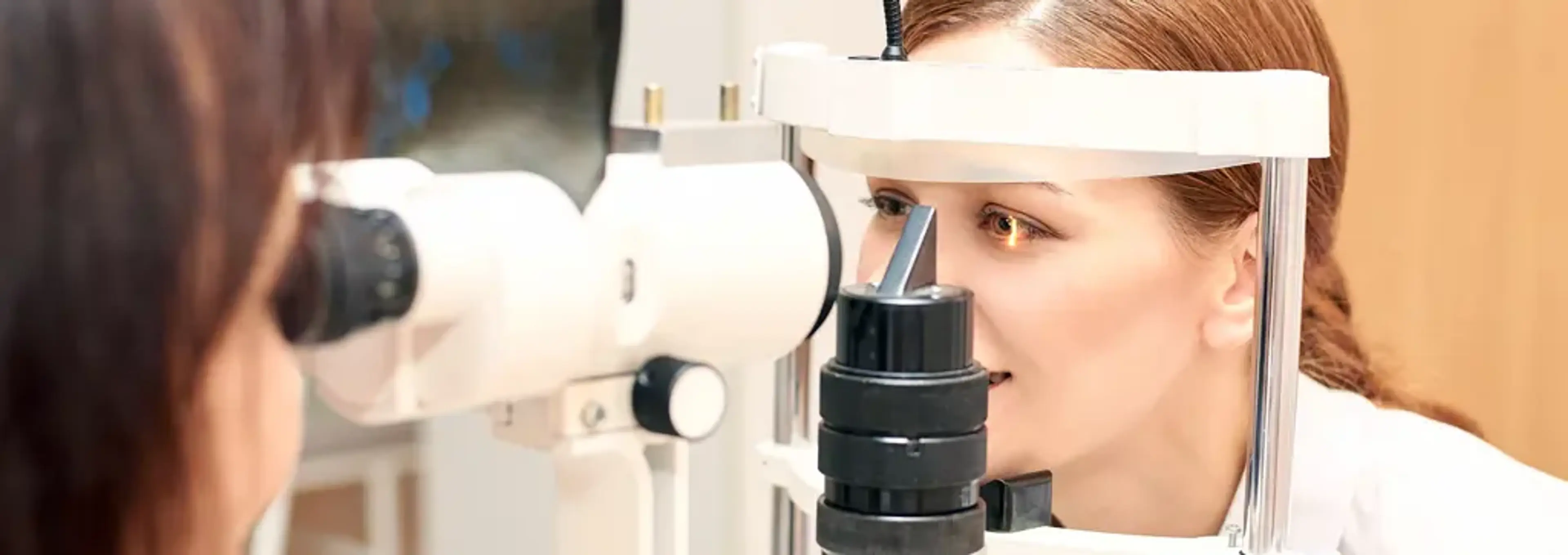
Think of this as a magnified health check of the structures that make clear vision possible:
eyelids and lashes
cornea
conjunctiva
anterior chamber
iris
lens
This is where ophthalmologists detect early cataracts, inflammation, or subtle surface irregularities. Early-stage cataracts, in particular, often go unnoticed by patients — but they can meaningfully affect night driving and contrast sensitivity.
Many patients in their 40s and 50s are relieved when we explain, “Your blurry vision isn’t your fault — your natural lens is simply starting to harden.” It gives them clarity, both literally and metaphorically.
This is arguably the most important step for long-term eye health — especially in Korea’s high-myopia population.
After dilating drops open the pupil, your doctor examines:
the optic nerve
the macula
peripheral retina
signs of retinal thinning or tears
early diabetic or hypertensive changes
vessels and nerve fiber layers
At GS Eye Center, we see many young adults with high myopia who appear perfectly healthy but show early retinal stretching or small weak spots that need monitoring. When caught early, these can be managed easily; when missed, they can lead to emergencies like retinal detachment.
Optical Coherence Tomography (OCT) is one of the greatest advancements in modern ophthalmology. It provides cross-sectional images of the retina and optic nerve at a microscopic level.
macular health
early glaucoma changes
age-related thinning
subtle swelling
nerve fiber integrity
For many patients, OCT is the first time they see their own retina — a delicate layered structure that explains so much about their visual experience. It’s like seeing the “blueprint” of your sight.
For patients over 40–45, we also examine:
lens clarity
signs of early presbyopia
lens thickness and position
future cataract progression
GS Eye Center has long performed advanced lens surgeries — so we explain these options carefully, without pressure. The goal is understanding, not rushing decisions.
This is the part patients often appreciate most.
A proper exam isn’t finished when the machines stop — it ends when you understand:
the condition of your eyes
the meaning behind the findings
the safest options moving forward
We often use analogies:
Cataracts: “It’s like your camera lens slowly fogging.”
SMILE Pro: “Imagine improving your vision through a 2 mm micro-keyhole.”
Dry eye: “Your tears are the foundation of clarity — when the foundation cracks, everything softens.”
A comprehensive exam shouldn’t leave you with more questions — it should replace worry with understanding.
Korea is a global leader in refractive surgery, diagnostics, and precision imaging. Patients benefit from:
early adoption of cutting-edge laser systems
high-resolution corneal tomography
advanced dry-eye diagnostics
retina-level OCT imaging at routine visits
We never rush. Eyes deserve time — and clarity requires attention to detail.
Patients often tell us, “I’ve never had an exam this thorough before,” which is how it should be. Vision is too important for shortcuts.
You should consider a full exam if:
you’re considering SMILE Pro, LASIK, or TransPRK
you’re thinking about lens implants
you’re experiencing increasing blur in your 40s or 50s
you have high myopia
you use screens for long hours
you wear contact lenses
you have a family history of glaucoma
you simply haven’t had a medical eye exam in years
Even if your vision feels “fine,” many early changes occur silently — especially in busy working adults who put their eyes under daily stress.
When done properly, a comprehensive eye exam is more than a checklist — it’s a roadmap of your visual future.
It tells you:
where your eyes are today
what risks may appear tomorrow
what options you have long-term
how to maintain clarity and comfort as you age
At GS Eye Center, we’ve seen how much peace of mind patients gain from understanding their eyes on a deeper level. Sometimes the exam reveals a problem; other times it confirms everything is healthy. Both outcomes are valuable.
Because in vision care, knowledge is confidence — and confidence leads to better decisions.
Whether you’re a professional in Gangnam dealing with tired eyes, an international resident considering SMILE Pro, or someone simply trying to understand vision changes, a comprehensive exam is the safest and most responsible first step.
Your vision shapes every part of your life. Start by understanding it — fully, clearly, and confidently.