Introduction
introduction:-beyond-surgery-the-overlooked-role-of-skin-qualityWhen people start noticing that reading glasses are becoming a constant companion — or that cataracts are clouding their once-clear world — they often begin exploring lens implant options. Among the most talked-about are multifocal and trifocal intraocular lenses (IOLs).
At first glance, the difference between the two may seem like a simple matter of numbers: “multi” versus “tri.” But in real-world vision, that distinction can feel like the difference between seeing comfortably across most daily activities and achieving near-natural sight at every distance — without needing glasses.
At GS Eye Center in Gangnam, where cataract and refractive lens exchange surgeries are performed with precision-guided systems, many patients ask: “Should I choose a multifocal or trifocal lens?”
Let’s explore what truly sets them apart — from how they work to what you’ll experience in your day-to-day vision.
Understanding the Basics: What Are Multifocal and Trifocal IOLs?
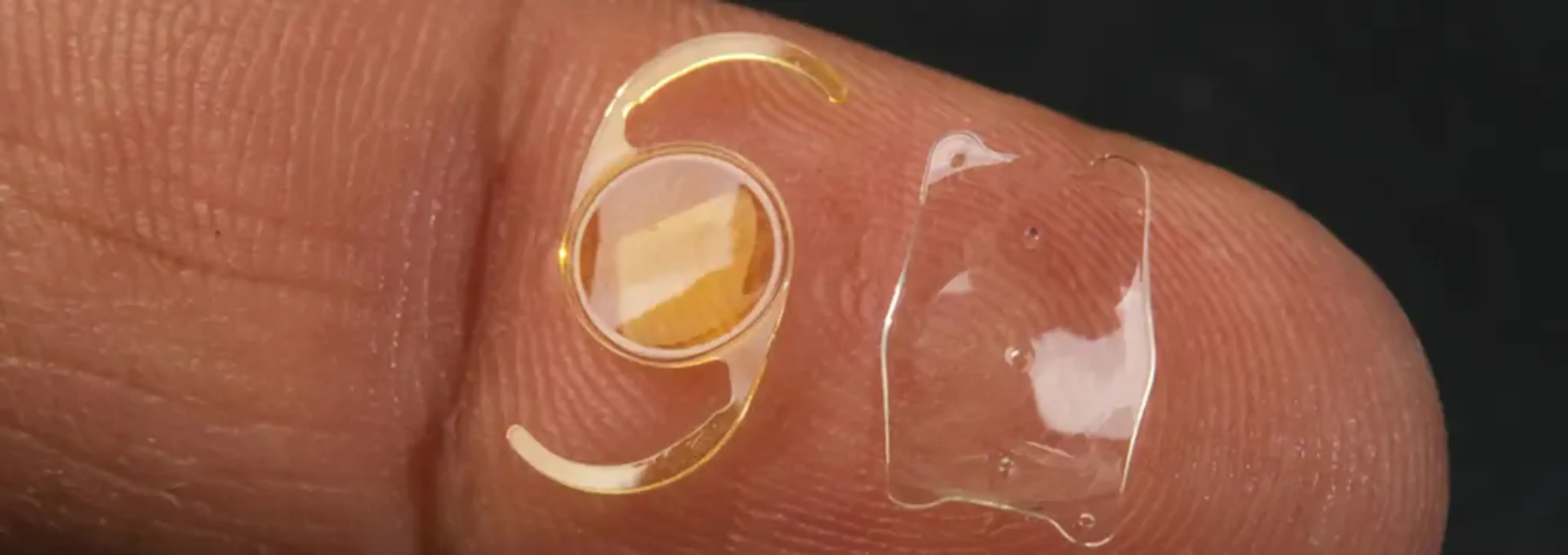
understanding-the-basics:-what-are-multifocal-and-trifocal-iolsAn intraocular lens (IOL) is an artificial lens implanted inside the eye to replace the natural crystalline lens — most often after cataract removal or during lens implant surgery for presbyopia correction.
For decades, monofocal lenses were the standard: they provided sharp distance vision, but reading glasses were still required. Then came multifocal IOLs, designed to offer multiple focal points — typically for near and far distances — so patients could see without glasses most of the time.
Trifocal IOLs, the next generation, expanded this technology even further. They add an additional focal point for intermediate vision, covering that “in-between” zone — the range where we spend much of our day: computer screens, dashboards, kitchen counters, and smartphones.
How Multifocal IOLs Work
how-multifocal-iols-workThink of a multifocal IOL as a lens with concentric rings, each directing light to different focal distances. The brain learns to adapt, selecting the most relevant focus for what you’re looking at.
Vision Zones
vision-zonesNear: Reading, texting, makeup application
Far: Driving, watching TV, outdoor activities
Intermediate: Partial clarity, but often not as sharp — especially for computer use
For many patients, multifocal lenses represent a significant freedom from glasses. But their biggest limitation often comes from that intermediate gap. You may see well for books and signs in the distance, but the screen in front of you might feel just slightly out of focus.
The Innovation of Trifocal IOLs: A True Three-Distance Solution
the-innovation-of-trifocal-iols:-a-true-three-distance-solution
Trifocal IOLs evolved precisely to close that gap. They’re designed to distribute light more evenly across three distinct focal points — near, intermediate, and far — offering a smoother visual transition across distances.
In modern trifocal lenses, such as PanOptix®, FineVision®, or AT LISA tri®, the optical structure has been refined to optimize light distribution and contrast. This means that everyday activities like reading your phone, driving at night, or working on a computer can all feel more natural and balanced.
The Real-Life Difference
the-real-life-differenceImagine being able to:
Read a restaurant menu without pulling your glasses down your nose
Check your smartphone effortlessly
See the expressions of friends sitting across the table
Glance at a sign across the street — all in one continuous visual flow
That’s the promise of trifocal lenses — and when implanted precisely, that promise often becomes a reality.
A Closer Look: Light Distribution and Visual Comfort
a-closer-look:-light-distribution-and-visual-comfortThe most significant difference between multifocal and trifocal IOLs lies in how they split and distribute light entering the eye.
Feature | Multifocal IOL | Trifocal IOL |
|---|
Focal Points | 2 (near + distance) | 3 (near + intermediate + distance) |
Light Distribution | Split between 2 zones | Split among 3 zones, optimized for balance |
Intermediate Vision | Moderate | Strong |
Typical Use | Reading + distance activities | Reading, computer work, driving |
Visual Adaptation | Easier for some patients | More natural for modern visual demands |
Modern trifocal IOLs are engineered to maintain brightness and contrast, even with multiple focal points. Earlier generations of multifocals sometimes caused mild halos or glare in low light. With newer trifocal designs and advanced surgical precision — like the systems used at GS Eye Center — those effects are often minimized to nearly unnoticeable levels.
Why Intermediate Vision Matters More Than You Think
why-intermediate-vision-matters-more-than-you-thinkWe often underestimate how much of our day falls into the “intermediate” category.
Checking a smartphone, working on a laptop, cooking, or reading the dashboard while driving — all these activities rely heavily on intermediate focus.
Many patients who initially chose multifocal IOLs years ago now consider upgrading to trifocal lenses, precisely because their lifestyles have evolved around digital devices and multitasking environments.
As one GS Eye Center patient put it, “I realized I was constantly adjusting my posture to read my computer screen — it wasn’t until after switching to a trifocal lens that I could finally relax my eyes again.”
The Role of Surgical Precision and Eye Health
the-role-of-surgical-precision-and-eye-healthWhile the lens technology is crucial, the outcome always depends on surgical precision and individualized diagnostics.
At GS Eye Center, every IOL implantation begins with a comprehensive eye analysis — including corneal topography, axial length measurements, and ocular surface evaluation. This level of diagnostic detail ensures that the lens power, centration, and alignment match the patient’s visual goals and anatomy perfectly.
Even the most advanced trifocal lens won’t perform optimally if the eye has astigmatism, dryness, or retinal conditions that aren’t addressed beforehand. That’s why personalized preoperative evaluation is as important as the technology itself.
Multifocal or Trifocal: Which Is Right for You?
multifocal-or-trifocal:-which-is-right-for-you
Choosing between these two isn’t just a technical decision — it’s a lifestyle one.
Here’s how ophthalmologists at GS Eye Center typically guide patients:
Sometimes, the decision also depends on eye dominance and optical balance. In select cases, a combination approach (such as a trifocal in one eye and an extended-depth-of-focus lens in the other) can deliver highly customized results.
Real-World Experience: What Patients Notice
real-world-experience:-what-patients-noticeTo be honest, most patients are surprised by how natural their post-surgery vision feels. The first thing they often mention is not “clarity,” but comfort.
At GS Eye Center, where laser-assisted lens surgery systems and image-guided IOL alignment are used, visual recovery tends to be rapid. Many patients resume light activities within a day, with full adaptation in a few weeks.
Those with trifocal lenses commonly describe the experience as “seeing the world in layers again” — near, far, and everything in between, all coming into harmony.
Advances That Enhance Trifocal IOL Performance
advances-that-enhance-trifocal-iol-performanceRecent innovations in laser cataract systems and wavefront diagnostics have made trifocal implantation safer and more predictable than ever.
Technologies like femtosecond laser lens fragmentation and intraoperative aberrometry allow surgeons to fine-tune placement and power for perfect centration — which directly affects contrast sensitivity and depth of focus.
At GS Eye Center, Dr. Kim Moo-Yeon and his team use these systems to ensure that each lens is aligned within micrometric precision. This attention to detail minimizes optical aberrations and enhances the full benefit of modern trifocal technology.
Are There Any Drawbacks?
are-there-any-drawbacksEvery lens design involves trade-offs. While trifocal IOLs offer unmatched range of vision, they can still cause mild halos or glare around lights in some cases, particularly during the initial adaptation phase.
However, most patients report that these symptoms fade significantly within a few weeks as the brain adjusts. Proper pre-surgical counseling and realistic expectations play an essential role in overall satisfaction — something GS Eye Center emphasizes during every consultation.
The Future of IOL Technology
the-future-of-iol-technologyThe evolution from multifocal to trifocal IOLs represents a major leap — but it’s not the endpoint. The next generation, quadfocal and adaptive IOLs, are now being studied, promising continuous focus through light modulation.
Still, even among the latest options, trifocal lenses remain the gold standard for patients seeking reliable, all-distance clarity with well-documented long-term outcomes.
Final Thoughts: Choosing Clarity That Matches Your Life
final-thoughts:-choosing-clarity-that-matches-your-lifeThe real difference between multifocal and trifocal IOLs isn’t just optical — it’s experiential. Multifocal lenses restore visual independence; trifocal lenses restore visual freedom.
If your lifestyle involves frequent reading, screen use, or multitasking in dynamic environments, a trifocal IOL may feel like regaining the natural flexibility your eyes once had.
At GS Eye Center in Gangnam, our team of board-certified ophthalmologists takes pride in matching each patient’s needs with the most suitable lens design and surgical method — ensuring not only sharper vision, but greater ease in everyday life.
If you’re considering lens implant or cataract surgery, schedule a personalized evaluation at a specialized center like GS Eye Center — where technology and precision meet compassionate, patient-first care.