Introduction
introduction:-the-challenge-of-aging-gracefully-in-a-fast-paced-worldFor many people living with diabetes, vision changes don’t arrive suddenly. They creep in quietly—slight blurriness after a long day, glare that feels stronger than before, or moments when your eyes simply feel “tired.” These changes are easy to rationalize. Work stress, screen time, lack of sleep—modern life offers plenty of convenient explanations.
What makes diabetic retinopathy dangerous is not how dramatic it looks at first, but how easy it is to dismiss.
At GS Eye Center in Gangnam, we often hear patients say, “I thought it was just fatigue,” or “My blood sugar was a bit high that month, so I didn’t worry.” Some have already adjusted their phone font size or changed glasses twice before considering a retinal exam.
By the time symptoms feel undeniable, the retina may already be under significant stress.
This article explains the warning signs you should never ignore, why they occur, and how early detection can make the difference between preserved vision and permanent loss—especially for patients balancing diabetes with busy, demanding lives.
Understanding Diabetic Retinopathy — In Simple Terms
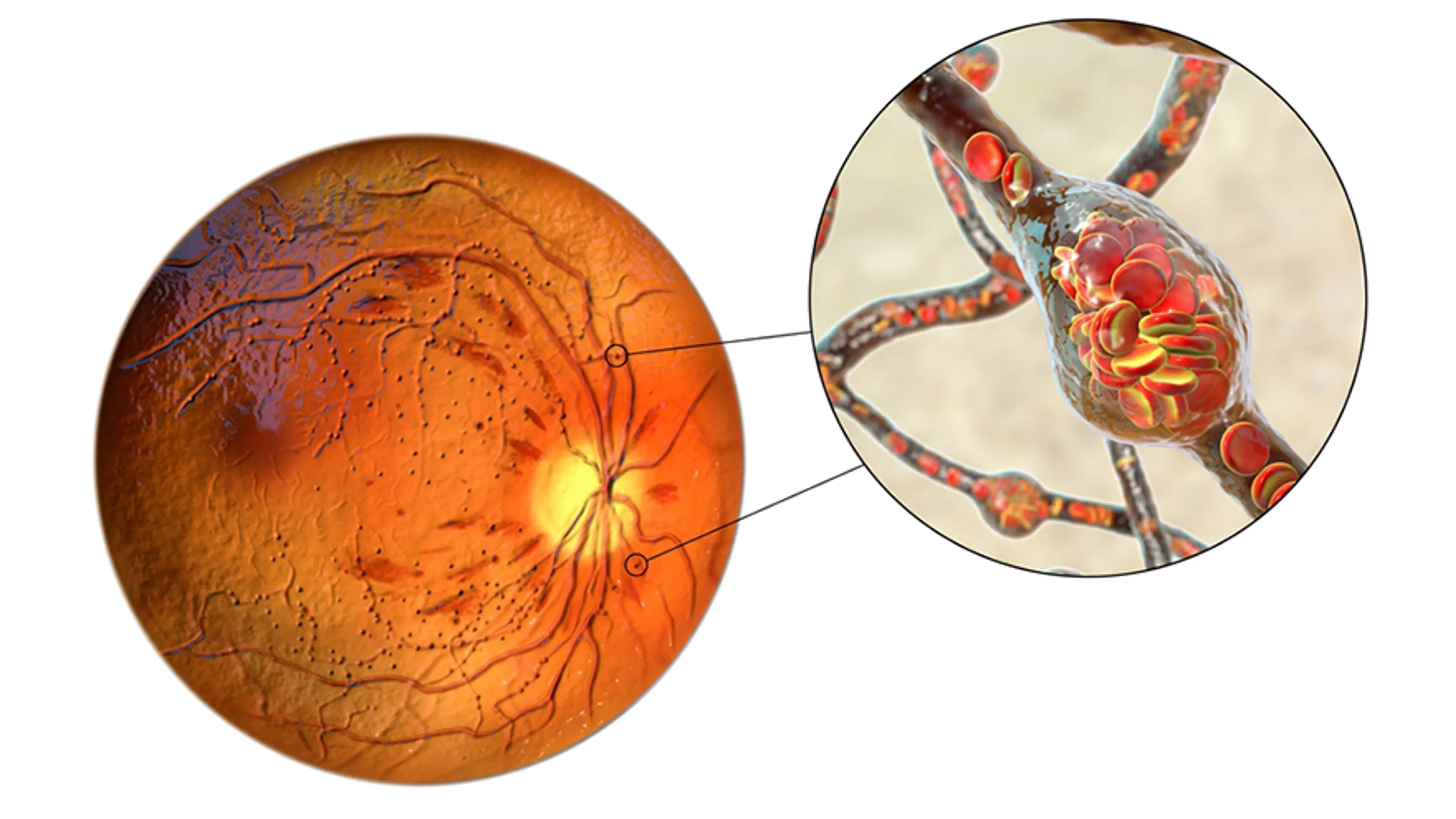
understanding-diabetic-retinopathy-in-simple-termsDiabetic retinopathy is damage to the tiny blood vessels in the retina, the light-sensitive tissue lining the back of the eye. These vessels are responsible for delivering oxygen and nutrients to retinal cells that convert light into visual signals.
When blood sugar remains elevated over months or years, several things happen simultaneously:
Vessel walls weaken
Blood flow becomes unstable
Oxygen delivery decreases
Fluid and blood leak into retinal tissue
Think of the retina like a high-resolution camera sensor. Even a small amount of moisture or pressure distorts the image. And unlike a camera, the retina cannot simply be replaced once it is damaged.
What many patients don’t realize is this:
You can have advanced retinal damage before you feel anything is wrong.
Vision often stays sharp until critical areas—especially the macula—are affected. That’s why diabetic retinopathy is frequently discovered later than it should be, despite years of silent progression.
The Earliest Signs Most People Overlook
the-earliest-signs-most-people-overlook
Blurry Vision That Comes and Goes
blurry-vision-that-comes-and-goesIntermittent blurriness is often the first functional symptom patients notice, yet it’s also the most commonly ignored.
It may:
Improve in the morning
Worsen after meals or late at night
Fluctuate with blood sugar levels
Feel different from ordinary eye strain
Inside the eye, fluid shifts in and out of retinal tissue as glucose levels rise and fall. These microscopic changes alter how light is processed, causing temporary blur.
This is not normal aging. It is not just “dry eyes.”
It is the retina reacting to metabolic stress.
Never ignore: vision that improves temporarily but keeps returning. Repetition is the clue.
Difficulty Focusing at Near or Far Distances
difficulty-focusing-at-near-or-far-distancesMany patients assume this is presbyopia or the natural need for stronger glasses. While age-related focusing changes are common, diabetic retinopathy affects contrast sensitivity and clarity, not just focus.
Patients often report:
Letters appearing slightly faded
Difficulty adjusting between screens and distance
Needing brighter light to read
If your prescription seems to change every few months, the problem may not be the lens—it may be subtle retinal swelling or early vascular instability.
Visual Disturbances That Signal Active Damage
visual-disturbances-that-signal-active-damageNew Floaters or Dark Specks
new-floaters-or-dark-specksOccasional floaters are common, especially with aging. However, a sudden increase—particularly dark dots, clouds, or thread-like shadows—should raise concern.
These can indicate:
Patients often describe it vividly:
“It felt like pepper sprinkled across my vision,” or “Like soot drifting in front of my eye.”
These descriptions are not poetic exaggerations. They are classic clinical clues of retinal bleeding and should prompt immediate evaluation.
Flashes of Light or Shadowed Areas
flashes-of-light-or-shadowed-areasFlashes of light may occur when the retina is irritated or mechanically stressed. Shadowed or missing areas—often noticed when covering one eye—can indicate localized retinal damage or traction.
These symptoms require prompt evaluation, not observation. Waiting risks progression to retinal detachment or permanent visual field loss.
When Diabetic Retinopathy Becomes Vision-Threatening
when-diabetic-retinopathy-becomes-vision-threatening
Persistent Vision Loss
persistent-vision-lossAt more advanced stages, visual changes stop fluctuating and become constant. Damage may involve:
Swelling at the macula, responsible for central vision
Widespread oxygen deprivation of retinal tissue
Recurrent or extensive bleeding into the vitreous
Patients frequently say, “I didn’t realize how bad it was until one eye became clearly worse than the other.” The brain adapts surprisingly well to gradual loss—until compensation is no longer possible.
At this stage, treatment is still possible, but it often requires more intensive intervention and longer recovery.
Distorted or Wavy Vision
distorted-or-wavy-visionWhen straight lines appear bent or warped, the macula is likely affected. This distortion reflects structural changes in the most vision-critical part of the retina.
This symptom is never normal. Even mild distortion should trigger detailed retinal imaging and close follow-up.
Why Symptoms Appear Late — and Why Exams Matter More Than Feelings
why-symptoms-appear-late-and-why-exams-matter-more-than-feelingsHere is the uncomfortable truth:
The retina does not hurt when it is being damaged.
There is usually no pain, no redness, and no external sign that something is wrong. Diabetic retinopathy is a silent process until visual function is compromised.
That is why detection relies on:
Dilated retinal examination
High-resolution retinal photography
Optical coherence tomography (OCT)
Vascular imaging when needed
At GS Eye Center, we emphasize advanced diagnostics before symptoms, especially for patients with long-standing diabetes, fluctuating HbA1c levels, high blood pressure, or kidney disease.
What people often overlook is how much early diagnostic testing shapes long-term safety. Detecting subtle changes early can mean monitoring instead of injections, or medication instead of surgery.
Why Busy Professionals Are Often at Higher Risk
why-busy-professionals-are-often-at-higher-riskIn Seoul, a consistent pattern appears among professionals:
Long working hours
Irregular meals
High stress
Delayed health checkups
Many patients manage diabetes responsibly yet postpone eye exams because vision still feels “good enough.” Ironically, these are the individuals who benefit most from early detection.
When caught early, diabetic retinopathy can often be stabilized with:
To be honest, many patients are surprised by how manageable early retinopathy can be when addressed before vision is affected.
What You Should Do If You Notice Any Warning Sign
what-you-should-do-if-you-notice-any-warning-signIf you have diabetes and experience:
Do not wait for it to pass.
A comprehensive retinal evaluation is not just a vision test. It is an assessment of the vascular health of your eyes, closely linked to overall systemic health.
Even if your last exam was “normal,” new symptoms warrant re-evaluation.
A Final Word from Clinical Experience
a-final-word-from-clinical-experienceOver decades in ophthalmic care, one pattern remains constant:
Patients rarely regret coming in early.
They often regret waiting.
If you are living with diabetes—even if your vision feels “mostly fine”—a proactive retinal evaluation can protect your sight long before problems become obvious. At GS Eye Center in Gangnam, our approach combines advanced imaging, experienced retinal specialists, and a calm, patient-first process designed to reduce both medical risk and anxiety.
Clear vision is not only about seeing well today.
It is about protecting your sight for decades to come.
If you have noticed subtle changes—or simply want reassurance—now is the right time to act.