Introduction
introduction:-a-common-frustration-with-petite-framesIt’s a moment most people face sooner or later — holding a book a little farther away, struggling to read a menu in dim light, or realizing that glasses that once worked perfectly no longer do. For many in their 40s and 50s, these are the first signs of presbyopia, the age-related loss of near focus. For others, especially as the years progress, the problem becomes more than blurred reading vision — lights start to glare, colors fade, and the world takes on a hazy, fogged-over look. That’s when cataracts enter the picture.
At first, these conditions may seem separate — one a nuisance of middle age, the other a sign of advancing years. But what many patients don’t realize is that both can be corrected in a single, precise procedure. At GS Eye Center in Gangnam, Seoul, this approach has become one of the most transformative ways to restore youthful vision and visual freedom — often without the need for glasses at all.
Understanding the Connection Between Presbyopia and Cataracts
understanding-the-connection-between-presbyopia-and-cataractsPresbyopia and cataracts share a common source: the aging lens inside the eye.
In presbyopia, the lens gradually stiffens and loses its ability to change shape, making it hard to focus on near objects.
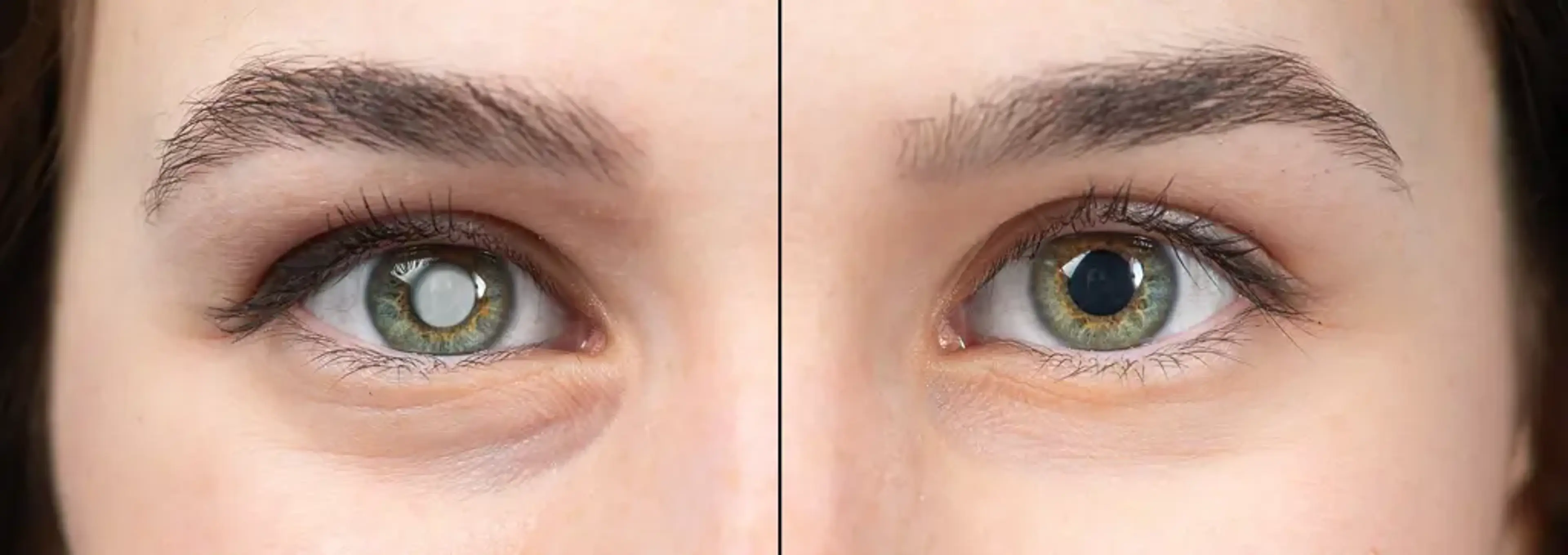
In cataracts, that same lens becomes cloudy over time, scattering light and dulling vision at all distances.
In other words, both conditions are different stages of the same biological process — the natural aging of the eye’s crystalline lens.
This overlap is why modern ophthalmology increasingly treats presbyopia and cataracts as a single continuum rather than two isolated problems. Instead of correcting each one separately, the solution now lies in replacing the aging lens with a clear, customized artificial one — a procedure that simultaneously eliminates cataracts and restores focusing ability.
The One-Surgery Solution: Presbyopia-Correcting Lens Implant
the-one-surgery-solution:-presbyopia-correcting-lens-implantThe surgery that treats both conditions is known as lens replacement surgery or cataract surgery with a presbyopia-correcting intraocular lens (IOL).
Traditionally, cataract surgery focused on simply removing the cloudy lens and replacing it with a clear, monofocal lens — restoring clarity, but not flexibility. Patients still needed glasses for reading or computer use.
Today, the approach is different. With advanced multifocal or extended depth-of-focus (EDOF) lenses, surgeons can restore both clarity and range of vision, allowing patients to see near, intermediate, and far distances with minimal dependence on glasses.
At GS Eye Center, lens replacement for cataract and presbyopia is performed using state-of-the-art diagnostic and surgical technology, ensuring that every implant is chosen and positioned with micrometer precision.
How the Surgery Works — Step by Step
how-the-surgery-works-step-by-step
Comprehensive Diagnostic Testing
Every successful lens surgery begins with detailed eye mapping. At GS Eye Center, advanced equipment like corneal topography, aberrometry, and optical biometry are used to measure the eye’s curvature, length, and internal optics. These results help determine which premium lens type will deliver the most natural visual balance.
Microsurgical Lens Removal
Using a technique called phacoemulsification, the surgeon makes a micro-incision (typically less than 2.5 mm) and gently removes the cloudy natural lens. This incision is self-sealing and requires no sutures.
Lens Implant Insertion
A presbyopia-correcting IOL — customized for the patient’s eye — is folded and inserted through the same micro-opening. Once inside, it unfolds and takes the place of the old lens.
Rapid Recovery and Visual Stabilization
Most patients notice immediate clarity the next day. Within days, colors appear brighter and fine details sharper. At GS Eye Center, patients often return to daily routines within 24–48 hours.
To be honest, many patients are surprised by how quick the process is. From preparation to surgery, it often takes less than 15 minutes per eye — and with modern technology, discomfort is minimal.
Choosing the Right Lens for Your Lifestyle
choosing-the-right-lens-for-your-lifestyleJust as no two eyes are alike, no two patients’ visual needs are the same. The art of this surgery lies not just in the technique, but in choosing the right lens design.
At GS Eye Center, lenses are selected based on individual goals — whether that’s reading comfortably without glasses, driving safely at night, or enjoying hobbies like golf or art.
Here are a few of the most commonly used types:
Multifocal IOLs: Provide clear vision at multiple distances using concentric optical zones. Ideal for patients seeking maximum independence from glasses.
EDOF (Extended Depth of Focus) IOLs: Create a continuous range of focus, reducing halos and glare — excellent for those who drive at night or work long hours on screens.
Trifocal IOLs: A next-generation design that delivers sharp near, intermediate, and distance vision simultaneously.
Toric IOLs: Correct astigmatism in addition to presbyopia and cataract — offering crisp clarity across the visual field.
The key is precise matching. That’s where advanced diagnostic systems — and the surgeon’s experience — make all the difference.
Why One Combined Surgery Makes Sense
why-one-combined-surgery-makes-sensePerforming a single, comprehensive procedure for both presbyopia and cataracts isn’t just about convenience. It’s about maximizing safety, precision, and long-term results.
1. Less Surgical Stress
1.-less-surgical-stressInstead of undergoing separate procedures years apart, patients benefit from one short, safe operation — minimizing anesthesia exposure and recovery time.
2. Stable Visual Outcome
2.-stable-visual-outcomeBy replacing the lens early — before a cataract significantly worsens — patients maintain consistent vision quality without facing progressive decline.
3. Long-Term Investment in Clear Vision
3.-long-term-investment-in-clear-visionOnce the natural lens is replaced, cataracts can’t form again. It’s a permanent solution — a one-time investment for lifelong clarity.
4. Emotional and Functional Freedom
4.-emotional-and-functional-freedomPatients often describe it as regaining their younger eyes — the freedom to read, work, and travel without constant glasses or visual strain.
Inside GS Eye Center’s Approach: Precision Meets Comfort
inside-gs-eye-center's-approach:-precision-meets-comfort
At GS Eye Center, led by Dr. Kim Moo-Yeon, former university professor and internationally recognized ophthalmic surgeon, the philosophy is clear: advanced technology should serve human comfort, not the other way around.
That’s why the center integrates high-resolution imaging, digital planning systems, and minimally invasive micro-surgical tools for every lens procedure.
Every patient receives:
Personalized lens simulations showing expected vision after surgery
Safety-focused preoperative screening, including retinal and corneal evaluations
Comfort-centered recovery care, supported by an experienced nursing team
Many professionals and international patients choose GS Eye Center for precisely this reason — the clinic’s blend of scientific rigor and patient-centered reassurance.
As Dr. Kim often explains, “Replacing the lens is not just about removing cataracts — it’s about restoring the natural dynamics of sight. When we select the right lens, we don’t just clear vision; we give patients their visual freedom back.”
What Recovery Feels Like
what-recovery-feels-likeAfter combined presbyopia–cataract surgery, patients often remark on how effortless recovery feels compared to their expectations.
Day 1: Vision is noticeably clearer, though mild sensitivity to light is common.
Week 1: Visual stabilization continues; most resume reading and driving.
Month 1: Eyes adjust fully to their new focusing range.
At GS Eye Center, follow-up visits ensure every patient’s visual outcome is fine-tuned, and any minor adjustments in focus or tear balance are addressed early.
Is It Right for You?
is-it-right-for-youIf you’re over 45 and noticing both reading difficulty and early lens clouding, you might already be an ideal candidate.
You may benefit from this one-step solution if you:
Struggle with both distance and near vision despite updated glasses
Notice increasing glare or dull colors at night
Have early or moderate cataracts but still lead an active professional life
Prefer to minimize downtime and avoid multiple procedures
However, final suitability depends on precise eye measurements and a detailed consultation. For example, patients with certain retinal or corneal conditions may need tailored lens options.
That’s why a full evaluation — not just a vision test — is essential.
The Future of Vision Care Is Already Here
the-future-of-vision-care-is-already-hereIn South Korea, where technology and aesthetics often go hand in hand, patients increasingly prefer comprehensive solutions that restore natural vision and convenience together. Lens implant surgery that corrects both presbyopia and cataracts is a prime example — merging surgical precision with visual artistry.
At GS Eye Center, this philosophy has guided more than two decades of patient care. Whether for local professionals balancing screen-heavy work or international visitors seeking world-class ophthalmology in Gangnam, the goal remains constant: to make clear, comfortable vision a reality again.
Final Thoughts: Seeing Clearly at Every Age
final-thoughts:-seeing-clearly-at-every-ageYou don’t have to wait for cataracts to “ripen” or for reading glasses to multiply on your desk. If you’re noticing both near-vision decline and early lens opacity, a single, expertly planned lens replacement surgery can address both — permanently.
Ask your eye doctor about presbyopia-correcting cataract surgery, or visit a trusted center like GS Eye Center in Gangnam, where advanced diagnostics and human-centered care come together for truly life-changing results.